
Searching the Clio Court Docket
Clio publishes no city case-search site, docket calendar, citation-payment portal, or online judge directory. So the ticket itself is your best tool. Read the court, ORI, issuing agency, UTC number, appearance address, and date right off the paper. Those fields answer the key question. Did the matter simply arise in Clio? Or does a Clio municipal office actually keep the record?
- Copy the full court name, UTC or case number, charge, and setting from the citation or notice.
- If the paper names a Clio municipal court, use the official contact shown there or obtain a verified city contact before paying.
- If it names Barbour District Court, call traffic at 334-687-1516 and ask about ticket entry and online eligibility.
- For Circuit or District state cases, use fee-based Just One Look or contact the Barbour Circuit Clerk.
- Ask the custodian to confirm the newest date and request the actual filing if docket details alone are not enough.
Do not send a Clio lookup to Eufaula Municipal Court. That city court hears its own police and ordinance cases, not every municipal matter in Barbour County.
Clio Docket Portal Gap
A missing Clio portal is itself useful. It means a failed web search is normal, not evidence that your case vanished. The citation and a direct call to the court carry far more weight than a broad name search. Hold onto the paper until the charge, setting, payment choice, and disposition are all confirmed.
When you call, ask a short set of questions. Is this the court that owns the UTC or case number? Has the case been entered yet? What is the current setting? Can any part be resolved online? How does the public get the docket or a named order? Answers to these let Clio staff or the Barbour clerk route you correctly, without assuming a city system that may not exist.
Clio search rule: No public city portal exists, so rely on the printed court name and a confirmed official phone route as your primary tools.
Clio Municipal Court Basics
Treat basic facts about a Clio municipal court as unknown until you confirm them. The city posts no verified address, judge, or clerk line. It posts no docket day, online pay service, or caseload count either. A ticket that expressly names a Clio municipal court is your first proof a city court is involved. You should still verify its current arrangements.
The routing rules matter here. A city ordinance matter or city-issued traffic charge normally stays with the municipal office unless transferred or appealed. A sheriff or trooper citation is different. It normally routes to Barbour District Court.
If the paper is unclear, call the Barbour traffic desk. Ask whether the citation is in its system. If not, get a current official Clio contact rather than guessing at the nearest court.
Use the Clio Ticket ORI
The ORI is an agency or court identifier printed on many traffic records. Paired with the issuing agency and court name, it can settle a Clio routing question. A city name alone cannot do that. The UTC ticket number matters too, especially for state traffic support. Keep every character and any leading zero. A shortened number can fail even after the case is entered.
| Court name | Identifies the municipal or District Court custodian for the Clio matter. |
|---|---|
| ORI | Helps distinguish the agency or court tied to the citation. |
| UTC number | The Uniform Traffic Citation identifier used by Alabama traffic support. |
| Issuing agency | Separates a possible Clio city case from sheriff or trooper traffic. |
| Appearance address | Shows where the citation directs the person to act or appear. |
The state Traffic Call Center asks for the defendant name, UTC number, and ticketed county. On a county-filed Clio-area citation, the ticketed county is Barbour.
Court Dates and Settings in Clio
Clio posts no daily docket or online city calendar. Use the date on the citation or mailed notice, then confirm it with the named court. For state cases, paid Alacourt case details may show the setting, and the Circuit Clerk can confirm the current event. A later order can reset an earlier date. The newest valid court action controls.
| Date | The day on the newest Clio-related notice, citation, or order. |
|---|---|
| Time | The exact reporting time stated by the issuing court. |
| Court | A confirmed Clio municipal custodian or Barbour District or Circuit Court. |
| Location | The appearance address printed by the court, not an address inferred from city limits. |
| Status | Whether the setting remains active, was continued, or was replaced by another order. |
Never skip a Clio setting just because a motion or request was filed. Unless the judge grants a change and the court records it, the existing date is your safe assumption.
Clio Ticket Entry Can Take Time
The Alabama Traffic Service Center gives a timing estimate. A ticket may take up to ten business days after issuance to enter the court system. A fresh Clio-area citation can fail in OTR or AlaPay. This can happen even when the number was copied perfectly. Waiting does not extend the printed date or excuse a required appearance.
Use the delay wisely. Confirm the issuing court and keep the paper safe. If the deadline is close, call the court rather than watching a website. For a Barbour District Court citation, that number is 334-687-1516. State support sits at 1-866-954-9399 or traffic@alacourt.gov. Give the name, UTC number, and Barbour as the ticketed county.
The ten-business-day window is a system warning. It is not permission to miss the date on a Clio citation.
Traffic Tickets in Clio
A Clio traffic search splits into two paths. A citation that names the municipal court stays with that city court. It stays there unless it tells you otherwise. A sheriff or state-trooper ticket filed in Barbour District Court is different. That ticket runs through the county traffic desk. It may qualify for online ticket resolution or AlaPay, depending on the citation. So figure out which court holds it first.
Paying an eligible ticket counts as a guilty plea. It also waives your right to a trial. If you want to fight the charge, follow the court's instructions. Or use the OTR option the state approves for that ticket. Anyone hoping for Defensive Driving School should hold off on payment. Alabama court guidance says paying voids that chance. The court must approve eligibility for your specific Clio ticket.
For the wider pay-versus-contest workflow, see the Barbour County traffic ticket record. In Clio, the real task is simple. Pick the right court before you pay or plead anything.
Clio State Cases Use County Channels
Clio's serious state cases go to Barbour Circuit Court. That covers felonies, major civil matters, and domestic cases. Misdemeanors, early felony proceedings, District civil cases, evictions, small claims, and county traffic all sit in District Court. Paige Q. Smith, the Barbour County Circuit Clerk, runs both levels through one office. There is no separate district clerk.
For online case lookup, Just One Look searches one case at a time for a fee. Alacourt.com is the subscription system for read-only access. AlaFile serves registered filers, not anonymous Clio docket research. If those routes fail, use the clerk counters in Clayton or Eufaula, the division phone lines, or a precise mailed request.
When you search, keep the full number intact. A case like 06-SM-2021-#### needs its prefix and its zeroes. The SM series marks small claims. Use a wrong prefix and the search may return nothing.
Where Clio Cases Go
A Clio municipal case stays with the city court through the municipal stage. Check any appeal route and deadline with that clerk, since no Clio-specific official instructions exist. County-filed traffic and misdemeanors stay in District Court. Felony preliminary work can begin there too. The Circuit Court docket carries the main prosecution after that.
Docket flow: Clio Municipal Court, if named › Barbour County Courts › Circuit Court
Treat this routing as a guide, not a promise that every Clio case hits all three levels. A major civil action can start in Circuit Court. A District matter can also end there. The Barbour County case lookup shows how the court code and case number tell those state dockets apart.
Clio State or Federal Docket?
Just One Look and the Barbour Circuit Clerk handle Alabama trial-court cases only. Neither holds federal dockets. A federal case tied to Clio belongs to the U.S. District Court for the Middle District of Alabama, the related Bankruptcy Court, or an appellate court. PACER is the official federal search route. It requires registration.
The assigned PACER source opens the separate federal docket portal itself.
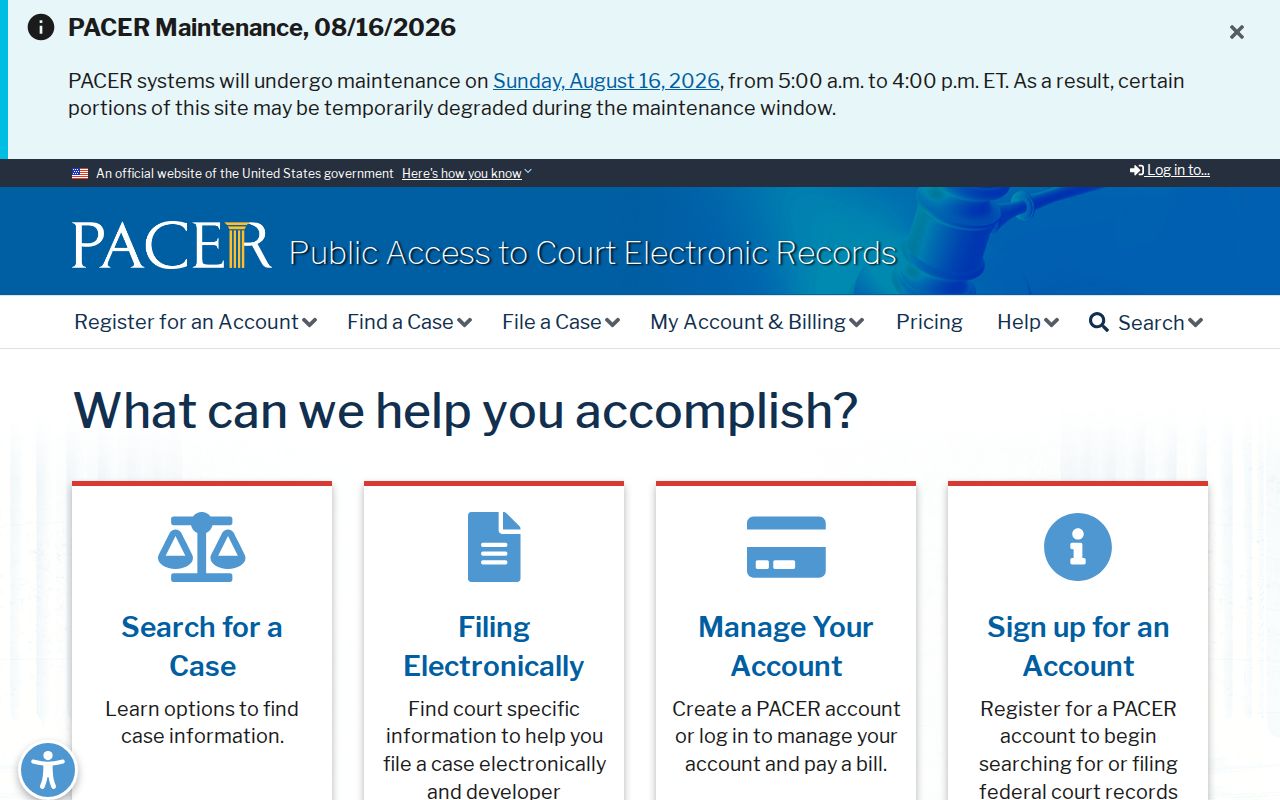
Use the federal path only for a federal court. A Clio municipal citation will not appear in PACER. Nor will a Barbour state case, no matter how often a local name search fails.
Clio Court Record Access Rules
Access to a Clio record depends on its custodian. Ask the municipal clerk for a city docket. Ask the Barbour Circuit Clerk for Circuit or District material. At either county counter, Rule 33(D) guarantees public inspection and printed copies of court records, at $0.25 per page.
Key rules:
Alabama public-records law provides inspection and copy rights for public writings, subject to exceptions and custodian procedures.
Rule 33(D) keeps clerk-office inspection available even while the AOC controls electronic databases.
Ala. Code § 15-19-7 restricts public access to youthful-offender records.
Juvenile cases, youthful-offender records, sealed material, and protected data may not show up. A missing Clio result can also mean an entry lag or an older file that was never imaged. Ask the custodian which explanation fits.
Requesting a Clio Docket Copy
For a Clio-related state file, go to the Clayton or Eufaula Circuit Clerk counter. A mail request should give the full case number. Add the case style and the exact record or document. Include an approximate filing date, plain versus certified copy, a contact phone, and a return address. Call ahead for the amount due, the accepted payment form, and postage. The clerk offers no county request form or general records email. So the phone and counter are your entry points.
Know what product you want. A docket printout lists case events. A filed image is the actual complaint, motion, order, or judgment behind an entry. A certified copy carries the clerk's authentication for formal use. The $0.25 rate covers ordinary Barbour court-record copies. Certification and archive-search fees must be confirmed with the clerk.
If an older Clio file is missing online, request archive retrieval. The clerk reports that most records are imaged. Not all. That qualifier is why phone, counter, and mail access remain part of any complete Clio docket search.